Portugal 2026 World Cup Squad: Pros, Trade‑offs and What Fans Can Realistically Expect
When the qualifiers wrap up, the first question on every Portuguese supporter’s mind will be who earns a place in the Portugal 2026 World Cup squad. The roster will shape tactical choices, dictate the balance between seasoned pedigree and emerging flair, and ultimately set the ceiling for what the nation can achieve in Mexico and Canada. Below we break down the most likely selections, the compromises they entail, and the practical expectations for a team that blends a fading legend with a new generation of talent.
Which players are almost certain to be in the 2026 lineup?
Even a year out, a core group has already cemented its place. Cristiano Ronaldo remains the obvious veteran; his fitness will be the decisive factor, but his leadership and set‑piece mastery are hard to replace. Bruno Fernandes will likely command the creative midfield role, offering both goal threat and a sophisticated passing range. Full‑backs João Cancelo (right) and Diogo Dalot (left) provide width and defensive stability, while centre‑back Rúben Dias anchors the backline with his positioning and aerial prowess. Up front, João Félix and Rafael Leão will compete for the striker’s spot, each bringing different attributes—Félix’s technical dribbling versus Leão’s explosive pace.
How does the age distribution shape Portugal’s tactical flexibility?
The squad straddles a broad age spectrum. The average age hovers around 27, with several players over 30 (Ronaldo, Dias) and a youthful surge of under‑23 talents like Pedro Gonçalves and Vitinha. This mix allows a manager to toggle between a physically demanding high‑press system—leveraging the younger players’ stamina—and a more controlled possession game, where experienced heads can dictate tempo. The trade‑off is subtle: relying too heavily on veterans risks fatigue in a compact tournament, while giving the ball to nascent stars may expose technical naivety against seasoned opponents.
What are the main trade‑offs between experience and current form?
- Ronaldo vs. Emerging Strikers: The legend’s goal instinct is unmatched, yet his sprint speed is declining. A younger striker could offer more dynamism in counter‑attacks.
- Bruno Fernandes vs. Midfield Alternatives: Fernandes excels in the final third, but his defensive work‑rate is modest. Pairing him with a box‑to‑box midfielder like Danilo Pereira balances creative output with defensive coverage.
- Defensive Cohesion: Retaining the same back‑four from 2022 preserves chemistry, but injuries or dips in form could force a reshuffle, testing depth at centre‑back.
Which formations are most plausible given the available personnel?
Coach Fernando Santos (or his successor) will likely oscillate between a 4‑3‑3 and a 4‑2‑3‑1. The 4‑3‑3 maximises wing play from Cancelo and Dalot, allowing Leão to exploit the half‑space. In a 4‑2‑3‑1, a double pivot with Dias and José Fonte protects the defence while Fernandes, Gonçalves, and Vitinha operate behind the lone striker, creating fluidity and overloads in midfield. The choice will hinge on opponent profiles: a more compact defense may see a shift to the tighter 4‑2‑3‑1, whereas an open group could invite the wider 4‑3‑3.
What realistic expectations should fans set for Portugal in 2026?
Portugal possesses the talent to reach the knockout phase, but a semi‑final or final appearance will require a convergence of form, fitness, and a bit of luck. The squad’s depth is respectable, yet not as deep as some South American or European rivals. Expect a hard‑fought group stage, a possible round‑of‑16 clash with a defensively disciplined side, and then a test of whether the veteran core can shoulder the pressure of a high‑stakes quarter‑final. In short, a respectable finish—perhaps a top‑four finish—is within reach, but a title run will be an upside rather than a guarantee.
Understanding the pros and trade‑offs of the Portugal 2026 World Cup squad equips fans to appreciate the nuances of each match. By recognizing where experience compensates for waning pace, and where youth injects energy, supporters can calibrate their hopes and enjoy the tournament with a clear-eyed enthusiasm.
Atal Pension Yojana (APY) Closure Form PDF - InstaPDF
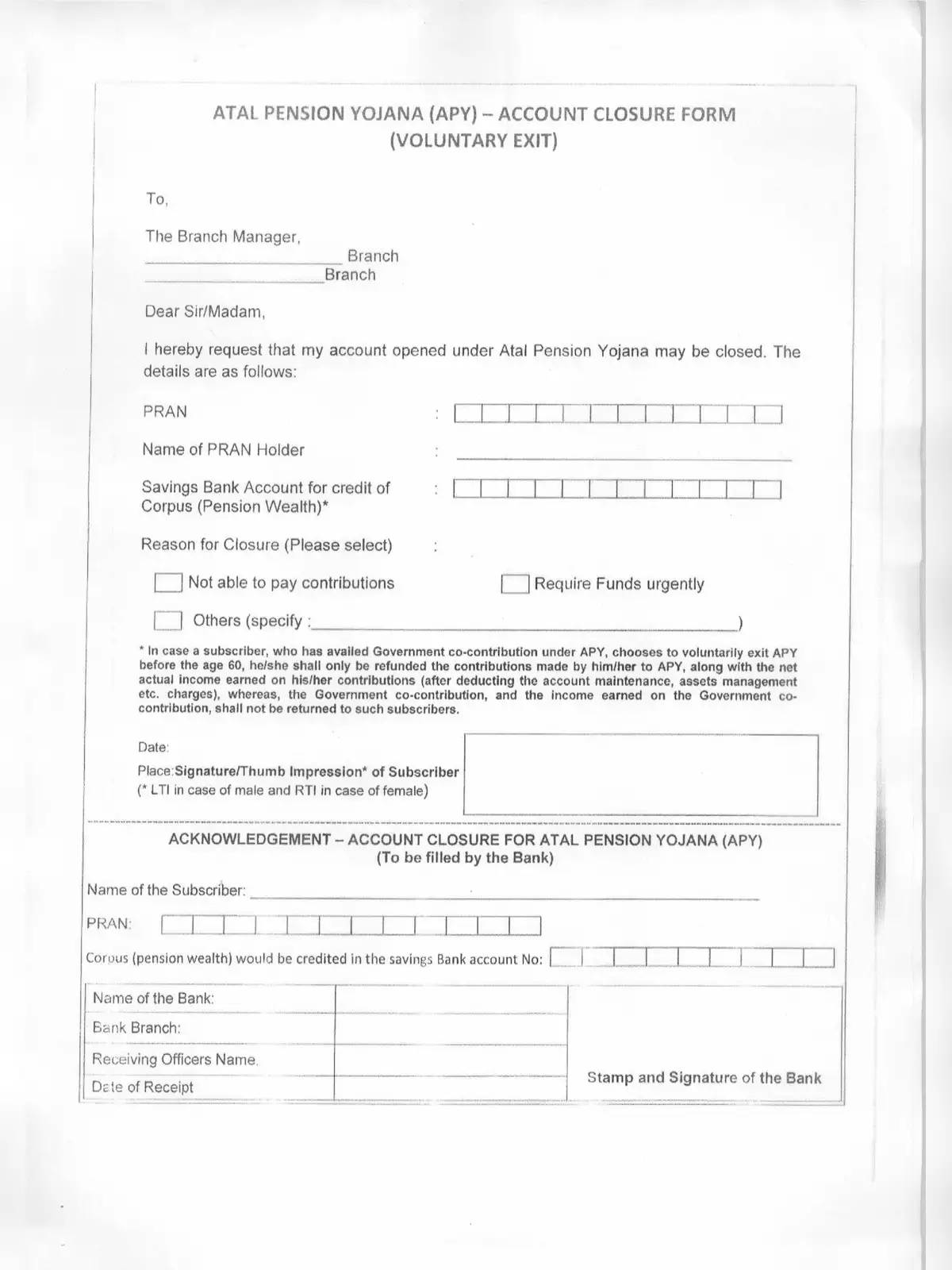
Atal Pension Yojana (APY) Closure Form PDF - InstaPDF